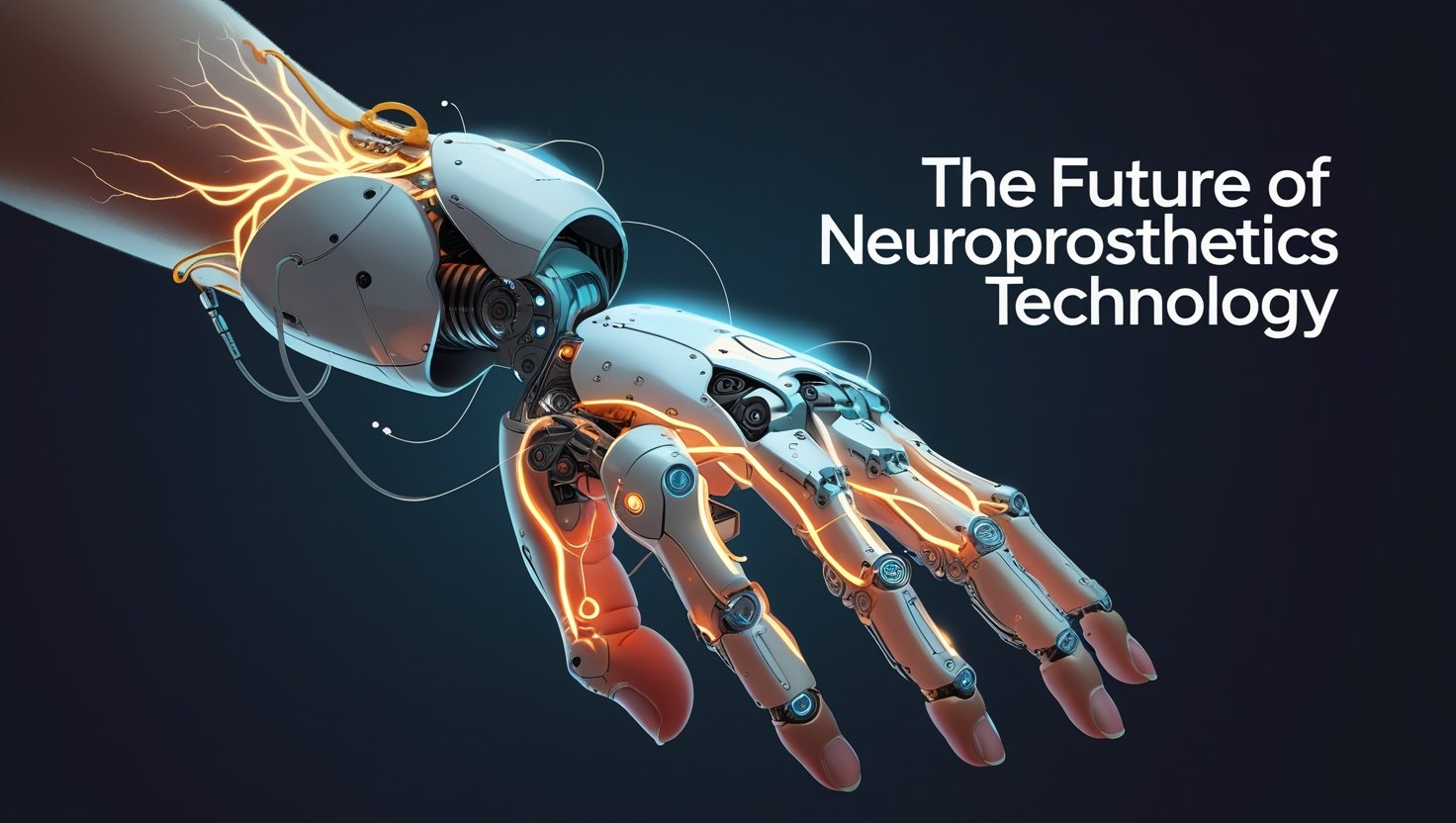
Ever tried doing something simple with oven mitts on, like tying your shoes or picking up a coin from the floor? Frustrating, right? Now imagine living your entire life that way. That has been the reality for people using old-style prosthetics. They work, sort of, but they never quite feel like part of you. Neuroprosthetics are changing that story. Instead of being tools you strap on, they connect directly with your brain. Think about moving your hand, and your prosthetic responds. Even better, some of these devices can send signals back, letting you actually feel again.
From Wooden Toes to High Tech:
The idea of replacing lost body parts is not new. In fact, archaeologists have found prosthetic toes from ancient Egypt made out of wood and leather. Back then, it was more about looks and basic survival. Fast forward to medieval Europe, and you find knights wearing iron hands or hooks after losing limbs in battle. These devices were heavy, uncomfortable, and awkward, but they gave people a way to carry on.
Things started to really change in the twentieth century. Wars left thousands of soldiers injured, and the demand for better prosthetics skyrocketed. Designers created lighter, more comfortable devices. By the 1960s, the first myoelectric prosthetics arrived. Instead of straps or cables, they picked up signals from muscles. A flex of a muscle could open or close an artificial hand. Revolutionary at the time, but far from perfect. The movements were clunky, and there was no sense of touch.
That missing sense of touch is exactly what neuroprosthetics aim to restore.
What Makes Neuroprosthetics Different:
Traditional prosthetics are like tools. Neuroprosthetics aim to feel like part of your body. They do this by tapping directly into the nervous system, sometimes even connecting straight to the brain.
Here is how it works. Your brain creates electrical signals every time you think about moving. Electrodes can pick up those signals and send them to a computer. The computer translates them into commands for the prosthetic. The result, you think about moving your hand, and your prosthetic hand moves.
But the real magic is feedback. Imagine holding a fragile glass of water. With a normal prosthetic, you might crush it or let it slip. With neuroprosthetics, sensors in the device can send information back to your brain. Suddenly, you know how hard you are gripping, whether the surface is smooth or rough, even if something is warm or cold. That is the game changer.
Moving Through Thought Alone:
One of the most impressive breakthroughs has been restoring movement to people who thought they would never move again. For someone paralyzed after a spinal cord injury, the brain still sends out signals, but the body never receives them. Neuroprosthetics can step in as the middleman.
In lab tests, patients with brain implants have controlled robotic arms, typed on virtual keyboards, and even maneuvered wheelchairs, all with thought alone. Amputees have used advanced neuroprosthetics for smoother, natural movements.
Take the story of a woman in the United States who lost her arm in a car accident. With a neuroprosthetic wired to her nerves, she learned not only to move her artificial hand but to feel sensations. She could tell the difference between a grape and a ball. She could hold her child’s hand again. That is not just medical progress, it is emotional healing.
Why Touch Changes Everything:
Movement is powerful, but without sensation, life feels incomplete. Try buttoning your shirt while wearing thick gloves. It is clumsy, frustrating, and slow. That is what life is like for someone using a basic prosthetic.
Researchers are now making real progress in restoring touch. By sending signals from sensors in the prosthetic back into the nervous system, users can feel again. Some describe it as tingling, others as light tapping, and some say it feels surprisingly natural.
This ability to sense pressure, texture, or temperature may sound small, but it changes everything. It means you can cook without fear of burning food, you can type without staring at every key, and you can hold a loved one’s hand and actually feel it. These are the details that make life worth living.
The Roadblocks Still Ahead:
Of course, it is not all smooth sailing. There are big challenges.
Surgery is risky. Implanting electrodes into the brain or nerves requires delicate operations, and there is always the chance of infection or complications.
The devices wear out. The body can react to implants, scar tissue may form, and signals can weaken over time.
The price tag is sky high. Most advanced neuroprosthetics are still in research stages, costing hundreds of thousands of dollars. That makes them out of reach for most people.
And then there is accessibility. Millions of amputees in developing countries cannot even get a simple prosthetic. The idea of advanced neuroprosthetics is a distant dream for them.
These are serious barriers, but they also highlight where the next wave of progress needs to happen, making neuroprosthetics safe, durable, and affordable.
More Than Just Medicine:
Here is where things get even more interesting. Neuroprosthetics are designed to restore lost abilities, but what if they go further? What if healthy people start using them for enhancement?
Imagine reacting faster than any human ever could, or connecting your brain directly to a computer, or even sharing thoughts with someone without speaking. Sounds wild, but researchers are already exploring brain-computer interfaces that do exactly that.
Of course, this raises ethical questions. Will only the wealthy have access? Could this create a new form of inequality? And how much machine is too much before we start questioning what it means to be human?
Whether we like it or not, these conversations are coming.
Stories That Bring Hope:
A paralyzed man who fed himself for the first time in years using a robotic arm controlled by his thoughts. An amputee who felt textures again and could tell the difference between silk and cotton. These are not just experiments, they are glimpses of what the future holds.
Technology is often described in numbers and specs, but these stories remind us it is about people. It is about giving back independence, dignity, and connection.
Bottom Line:
The future of neuroprosthetics technology is not science fiction anymore. It is happening right now in labs and clinics around the world. The journey is not easy, with high costs, surgical risks, and tough ethical questions, but the direction is clear. We are moving toward a world where people can move and feel again through devices that work hand in hand with the brain. And that is a future worth reaching for.
FAQs:
1. What are neuroprosthetics used for?
They help restore lost abilities like movement and touch for people with amputations or paralysis.
2. How do neuroprosthetics connect to the body?
They use electrodes that pick up signals from the brain or nerves, which are then translated into movement by the device.
3. Can neuroprosthetics really restore touch?
In some cases, yes. Sensors in the device send information back into the nervous system, creating a sense of pressure or texture.
4. Are these devices available today?
Most advanced systems are still in trials, but simpler versions are slowly reaching patients.
5. What challenges do neuroprosthetics face?
Risks from surgery, high cost, limited durability, and lack of access in many parts of the world.
6. Could neuroprosthetics be used for enhancement?
Possibly. Researchers are exploring how the same technology might improve performance or connect directly to computers, though this raises big ethical questions.
Leave a Reply