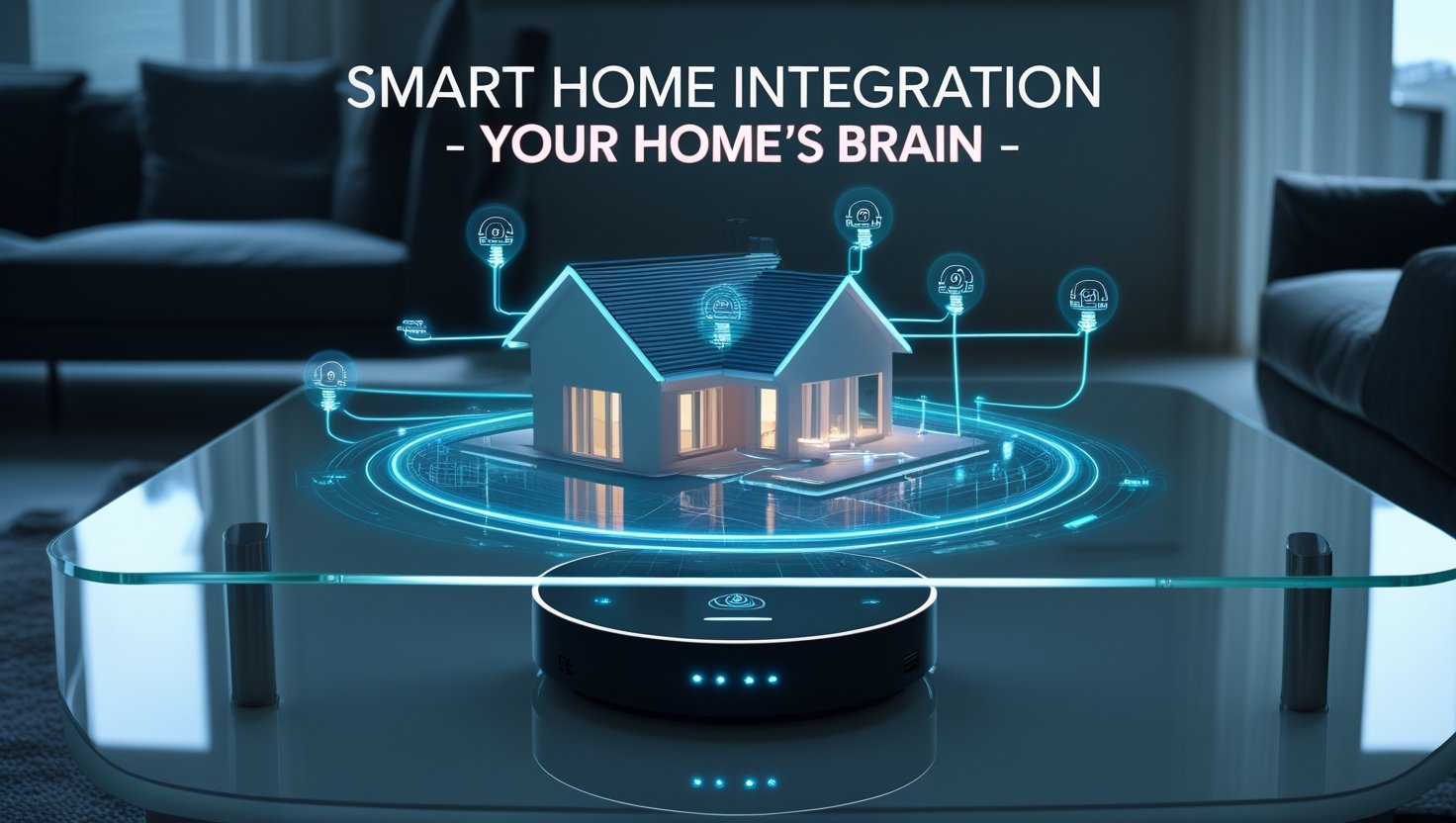
Ever wondered what it would feel like to live in a home that anticipates your needs before you even realize them? Smart home integration isn’t just a luxury anymore, it’s becoming the invisible backbone of modern living, silently orchestrating comfort, security, and efficiency around you. Your home no longer just houses you; with proper integration, it actually understands you.
The Invisible Orchestra Conductor:
Unlike the piecemeal approach of purchasing individual smart devices, true smart home integration works like a seasoned orchestra conductor, harmonizing all elements into a cohesive symphony. This isn’t about having a random collection of gadgets; it’s about creating a seamless ecosystem where your thermostat communicates with your windows, your lights respond to your presence, and your security system knows when you’re away.
What makes integration powerful isn’t just the technology itself, but how it fades into the background of your daily routine. The most sophisticated smart homes don’t draw attention to their intelligence—they simply make life noticeably more comfortable without demanding constant attention or management.
The Hidden Value Proposition:
The conversation around smart homes often fixates on convenience, but the true revolution lies deeper. Meaningful home automation delivers three transformative benefits that rarely make flashy headlines.
First, there’s the subtle but significant impact on wellness. Smart homes can maintain optimal lighting throughout the day to support your circadian rhythm, automatically adjust humidity levels to prevent respiratory issues, and even filter indoor air pollutants before they reach concerning levels. Your environment actively protects your health without requiring your constant vigilance.
Second is the remarkable resource optimization. An integrated system doesn’t just save energy when you remember to adjust settings, it continuously analyzes usage patterns, weather forecasts, and occupancy to make micro-adjustments that collectively generate substantial savings. Many homeowners discover their utilities dropping by 15-30% after comprehensive smart system implementation, often paying for the initial investment within just a few years.
Third is the preservation of attention, perhaps our most precious modern resource. Each manual adjustment, each app you need to open, each setting you need to remember consumes mental bandwidth. An intelligently integrated home handles these details automatically, returning countless small moments of focus back to you throughout each day.
Finding Your Sweet Spot:
Smart home integration exists on a spectrum, not as a binary yes-or-no proposition. Understanding where you fall on this spectrum is essential for creating a system that enhances rather than complicates your life.
At the entry level, you might focus on voice control integration, connecting various devices to respond to simple commands through platforms like Google Home, Amazon Alexa, or Apple HomeKit. This approach provides immediate convenience without requiring extensive technical knowledge or investment.
Moving deeper, scene-based integration allows you to trigger multiple actions with a single command or event. Your “Goodnight” routine might lock doors, lower thermostats, turn off non-essential devices, and activate security monitoring. Your “Movie Night” scene could dim lights, lower blinds, and optimize audio settings across multiple rooms.
The most sophisticated integration involves predictive automation and interconnected responses. This level uses artificial intelligence to learn patterns and anticipate needs, while creating complex conditional relationships between devices. Your home might recognize that when you’ve been away for more than four hours on a hot day, it should pre-cool only the rooms you typically use first when returning home, starting precisely when your location suggests you’re 20 minutes from arrival.
Networking Infrastructure:
The most underappreciated aspect of successful smart home integration isn’t the visible devices but the invisible network supporting them. Many homeowners invest thousands in smart appliances and controls, only to experience frustration because they’ve built on a shaky foundation.
A robust home network requires more than just fast internet. Strategic router placement, mesh systems for consistent coverage, dedicated bandwidth for critical systems, and proper security protocols all contribute to reliability. Consider your network infrastructure as the nervous system of your smart home, when it’s compromised, even the most sophisticated devices become unreliable.
Professional integrators often start with a network assessment before recommending any smart devices, understanding that performance issues typically stem from underlying connectivity problems rather than the devices themselves. Investing in professional network design can prevent countless headaches later, particularly as your system grows more complex.
Breaking the Ecosystem Barrier:
One of the most significant challenges in smart home integration has historically been the “walled garden” approach of major manufacturers. Apple, Google, Amazon, and other key players created ecosystems that work beautifully within their own boundaries but often resist playing nicely with outside devices.
The landscape is evolving, however, with the emergence of cross-platform compatibility standards like Matter and Thread. These protocols are revolutionizing integration by establishing common languages that devices can use to communicate regardless of manufacturer. The implications are profound; you’re no longer forced to commit to a single ecosystem, and can instead select the best devices for each specific function.
This shift represents a fundamental democratization of smart home technology. Early adopters often needed extensive technical knowledge or professional help to force different systems to communicate. Now, even those with minimal technical skills can create sophisticated integrations across previously incompatible devices.
The Human Element:
The most overlooked truth about smart home integration is that there is no one-size-fits-all solution. The perfect system for a tech-enthusiastic young professional will differ dramatically from what works best for a family with young children or seniors aging in place.
Successful integration begins with honest reflection about your lifestyle, preferences, and pain points. Do you value voice control, or do you prefer discrete interfaces? Are you comfortable with cameras inside your living spaces, or do you prefer less intrusive presence detection? Do you enjoy actively managing your environment, or do you want automation to handle details without your input?
This human-centered approach to smart home design often contradicts conventional wisdom. While technology enthusiasts might push for maximizing automation, some homeowners find they prefer keeping certain functions manual. The goal isn’t to create the most technically advanced system possible but rather one that feels natural and intuitive for your specific needs.
Conclusion:
Smart home integration represents one of the most significant shifts in how we interact with our living spaces since the introduction of electricity. Yet its most profound impact comes not from flashy features but from how it quietly recedes into the background of our lives. As integration technology continues evolving, the distinction between “smart” and “standard” homes will likely disappear entirely. We won’t talk about smart homes any more than we specifically discuss “electric homes” today. The intelligence will simply be an expected, embedded quality of the spaces we inhabit.
FAQs:
1. What’s the difference between smart devices and true home integration?
Smart devices operate independently, while true integration creates a system where devices communicate with each other. Think of individual smart devices as talented musicians, while integration is what transforms them into an orchestra playing in perfect harmony.
2. How much does comprehensive smart home integration typically cost?
Entry-level integration focusing on key functions can start around $1,000-2,000, while comprehensive systems for larger homes may range from $10,000-30,000. However, energy savings and increased property value often offset these costs over time.
3. Do I need professional installation for proper integration?
While DIY options are improving, professional installation ensures optimal network configuration, proper device placement, and system reliability. Complex integrations involving security, electrical, and HVAC systems typically benefit most from professional expertise.
4. How can I prevent my smart home from becoming obsolete?
Choose systems with regular software updates, support for open standards like Matter protocol, and modular components that can be upgraded individually. Investing in quality networking infrastructure provides flexibility for future expansion.
5. What integration platform works best for beginners?
For beginners, platform ecosystems like Apple HomeKit, Google Home, or Amazon Alexa provide user-friendly starting points with growing compatibility across brands. These platforms offer simpler setup processes and intuitive interfaces.
6. How do I maintain privacy while enjoying smart home benefits?
Pick local processing when possible, regularly update device firmware, use strong, unique passwords, segment your network, and carefully review privacy policies. Consider edge computing devices that process data locally rather than sending everything to the cloud.
Leave a Reply