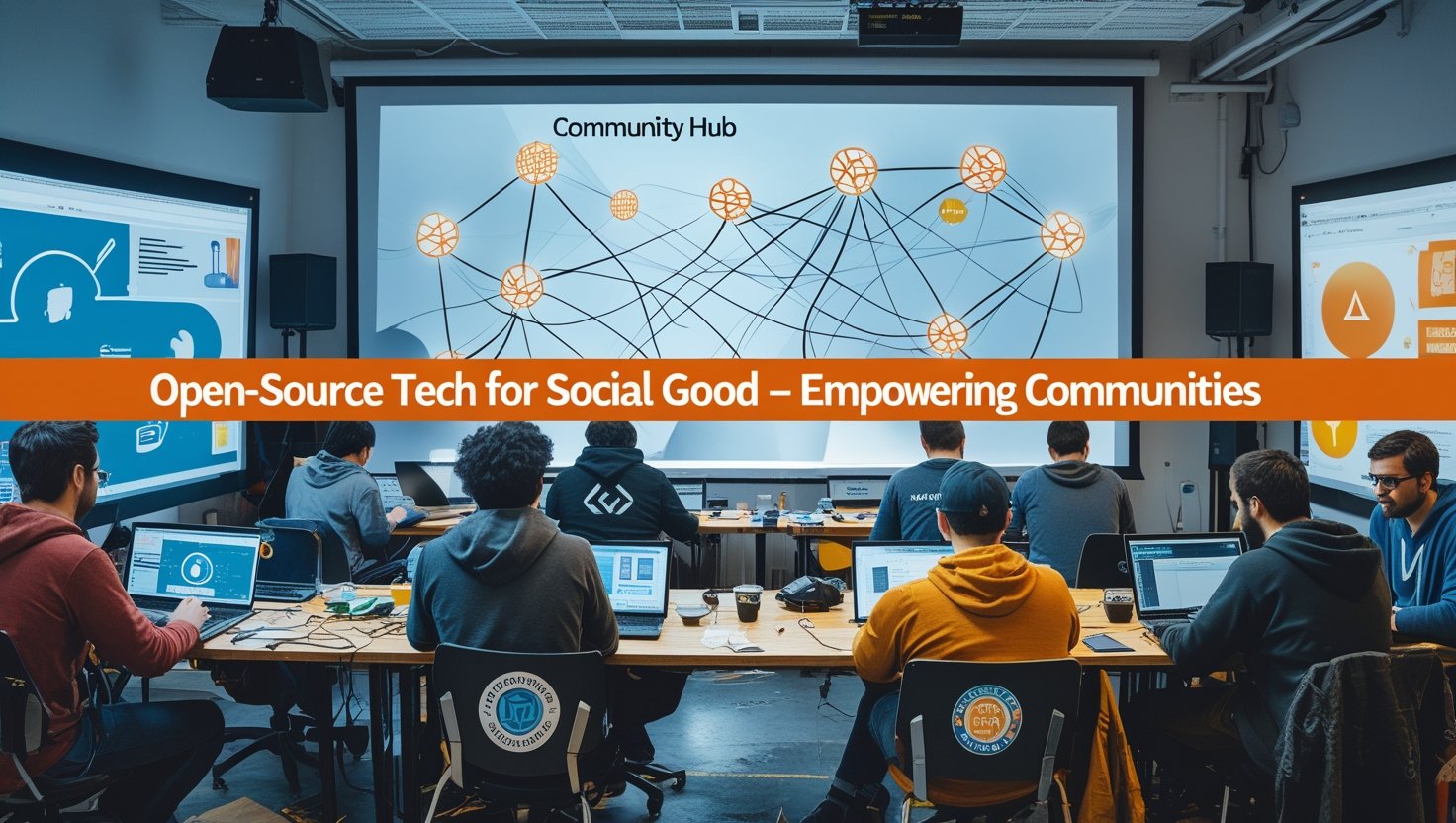
Imagine a world where a single line of code written by a student in rural Kenya could help disaster victims in Haiti access clean water, or where a teacher in Bangladesh could customize educational software that reaches millions of children worldwide, all without corporate gatekeepers or licensing fees. This is the transformative power of open-source technology for the greater good, where collaborative innovation meets community empowerment to address humanity’s most pressing challenges.
The Democratization Revolution of Digital Tools:
Open-source technology has fundamentally shifted the landscape of social innovation by removing traditional barriers that once prevented communities from accessing powerful digital solutions. Unlike proprietary software that requires expensive licenses and corporate approval, community-driven technology allows anyone with an internet connection to download, modify, and redistribute tools that can transform lives.
This democratization extends far beyond simple cost savings. When communities gain direct access to source code, they acquire the ability to adapt technology to their unique cultural, linguistic, and operational needs. A healthcare management system developed in Silicon Valley might not account for the specific challenges faced by clinics in rural Ghana, but open-source solutions can be modified by local developers who understand these nuances intimately.
The ripple effects of this accessibility are profound. Small nonprofits that previously couldn’t afford enterprise-level software can now deploy sophisticated social impact technology that rivals tools used by multinational corporations. This leveling of the technological playing field enables grassroots organizations to amplify their impact exponentially while maintaining complete control over their digital infrastructure.
Collaborative development models in open-source projects create learning opportunities that traditional software procurement never could. When community members participate in adapting and improving tools, they develop technical skills that strengthen the entire ecosystem, creating a virtuous cycle of empowerment and innovation.
Breaking Down Silos Through Collective Intelligence:
The power of open-source communities lies not just in shared code but in shared wisdom. When developers, nonprofit workers, academics, and community leaders collaborate on technology for social change, they bring diverse perspectives that result in more robust and inclusive solutions than any single organization could create.
Consider how humanitarian technology projects benefit from this collective approach. Emergency response software developed through open collaboration incorporates insights from disaster relief veterans, local emergency coordinators, affected community members, and technical experts. This multi-stakeholder input ensures that tools actually work in real-world crisis situations rather than just theoretical scenarios.
Community empowerment through technology accelerates when local stakeholders become active contributors rather than passive recipients. Indigenous communities documenting traditional knowledge, refugee advocacy groups tracking policy changes, or environmental activists monitoring pollution levels can all customize open-source tools to serve their specific missions while contributing improvements that benefit similar communities worldwide.
The transparency inherent in open-source development builds trust in ways that proprietary solutions cannot match. When community organizations can inspect every line of code, they understand exactly how their data is being processed and can identify potential security vulnerabilities or ethical concerns before deployment.
Bridging the Digital Divide Through Accessible Innovation:
Open-source technology serves as a powerful equalizer in addressing global digital disparities. While commercial software often requires expensive hardware and robust internet connections, many community-focused solutions are designed with resource constraints in mind, running efficiently on older devices and functioning in low-bandwidth environments.
Educational technology exemplifies this democratizing potential. Open-source learning management systems, educational games, and digital textbooks can be freely distributed to schools regardless of their budgets. Teachers can modify content to match local curricula, translate materials into local languages, and share improvements with educators facing similar challenges across the globe.
Healthcare represents another frontier where social good technology creates a transformative impact. Open-source electronic health record systems, telemedicine platforms, and diagnostic tools enable clinics in underserved areas to provide higher-quality care while maintaining complete control over sensitive patient data. These solutions often cost a fraction of commercial alternatives while offering superior customization capabilities.
Agricultural technology developed through open-source collaboration helps small-scale farmers access sophisticated tools for crop monitoring, weather prediction, and market analysis. Unlike proprietary agricultural software that may be designed for large commercial operations, community-driven solutions can be adapted for subsistence farmers who need simple, offline-capable tools that work with basic smartphones.
Scaling Impact Through Network Effects:
The scalability of open-source solutions creates unique opportunities for amplifying social impact. When one community develops a solution to a local problem, that innovation becomes immediately available to every other community facing similar challenges. This network effect enables small investments in local development to generate global benefits.
Nonprofit technology ecosystems demonstrate this scaling power effectively. A grant management system developed by one foundation can be adapted and improved by hundreds of other organizations, with each implementation contributing enhancements that benefit the entire network. The cumulative effect is sophisticated software that rivals expensive commercial alternatives while remaining completely community-controlled.
Civic technology initiatives showcase how open-source approaches can strengthen democratic participation. Voting systems, public records management, citizen feedback platforms, and transparency tools developed through open collaboration ensure that democratic institutions remain accountable to the communities they serve rather than to software vendors.
The sustainability of open-source projects depends on community engagement rather than corporate profits. While this creates challenges around long-term maintenance, it also ensures that successful projects remain aligned with community needs rather than market pressures. Projects that truly serve their communities tend to attract ongoing volunteer contributions that sustain development over time.
Innovation at the Intersection of Purpose and Technology:
Social innovation through technology flourishes when developers understand the real-world contexts where their code will be deployed. Open-source projects excel at fostering these connections between technical expertise and domain knowledge, creating solutions that are both technically sound and practically effective.
Digital inclusion efforts benefit enormously from open-source approaches because they can address the specific barriers faced by marginalized communities. Accessibility features, multilingual support, cultural sensitivity, and offline functionality are more likely to be prioritized in community-developed technology than in commercial products targeting mass markets.
Environmental sustainability represents another area where open-source environmental solutions create unique value. Climate monitoring systems, renewable energy management tools, and conservation tracking platforms can be deployed globally without licensing restrictions, enabling coordinated responses to environmental challenges that transcend national boundaries.
Research and development in social sectors accelerate when findings and tools are openly shared. Academic institutions, think tanks, and research nonprofits can build upon each other’s work directly rather than duplicating efforts or working around proprietary limitations. This collaborative approach speeds innovation while ensuring that beneficial discoveries reach communities that need them most.
Governance Models That Preserve Community Autonomy:
The governance structures of successful open-source social projects often reflect the democratic values they aim to promote. Unlike corporate software development, where decisions are made based on profit margins, community-governed technology projects prioritize user needs and social impact through transparent decision-making processes.
Stakeholder participation in open-source governance ensures that the communities most affected by technology have meaningful voices in its development. This participatory approach prevents the imposition of solutions that may be technically elegant but culturally inappropriate or practically ineffective.
Intellectual property considerations in open-source social projects favor community benefit over individual or corporate ownership. Copyleft licenses ensure that improvements to community tools remain available to all users, preventing the privatization of collectively developed solutions.
The long-term viability of open-source social projects depends on building diverse, sustainable communities around shared purposes rather than relying on single organizations or funding sources. This distributed approach to project stewardship creates resilience against institutional failures while maintaining accountability to user communities.
Conclusion:
Open-source technology for social good represents more than just free software, it embodies a fundamental shift toward community empowerment and collaborative problem-solving. As we’ve explored, these approaches don’t just reduce costs; they transform how communities engage with technology, ensuring that digital tools serve human flourishing rather than corporate profits.
The path forward requires continued investment in community-driven innovation and recognition that technology’s greatest potential lies not in proprietary algorithms but in open collaboration that amplifies collective wisdom for social transformation.
FAQs:
Q1: What makes open-source technology better for social good than commercial software?
A: Community control, customization freedom, and transparent development aligned with social missions rather than profit.
Q2: How can small nonprofits get started with open-source solutions?
A: Begin with established platforms, join user communities, and gradually build internal technical capacity.
Q3: Are open-source social tools secure and reliable?
A: Yes, community scrutiny often identifies vulnerabilities faster than proprietary alternatives, improving overall security.
Q4: What skills do communities need to benefit from open-source technology?
A: Basic technical literacy helps, but many solutions require no coding knowledge to use effectively.
Q5: How do open-source projects sustain themselves financially?
A: Through grants, donations, volunteer contributions, and support services rather than licensing fees.
Q6: Can open-source technology really scale to address global challenges?
A: Yes, network effects allow local innovations to spread globally while adapting to diverse contexts.
Leave a Reply