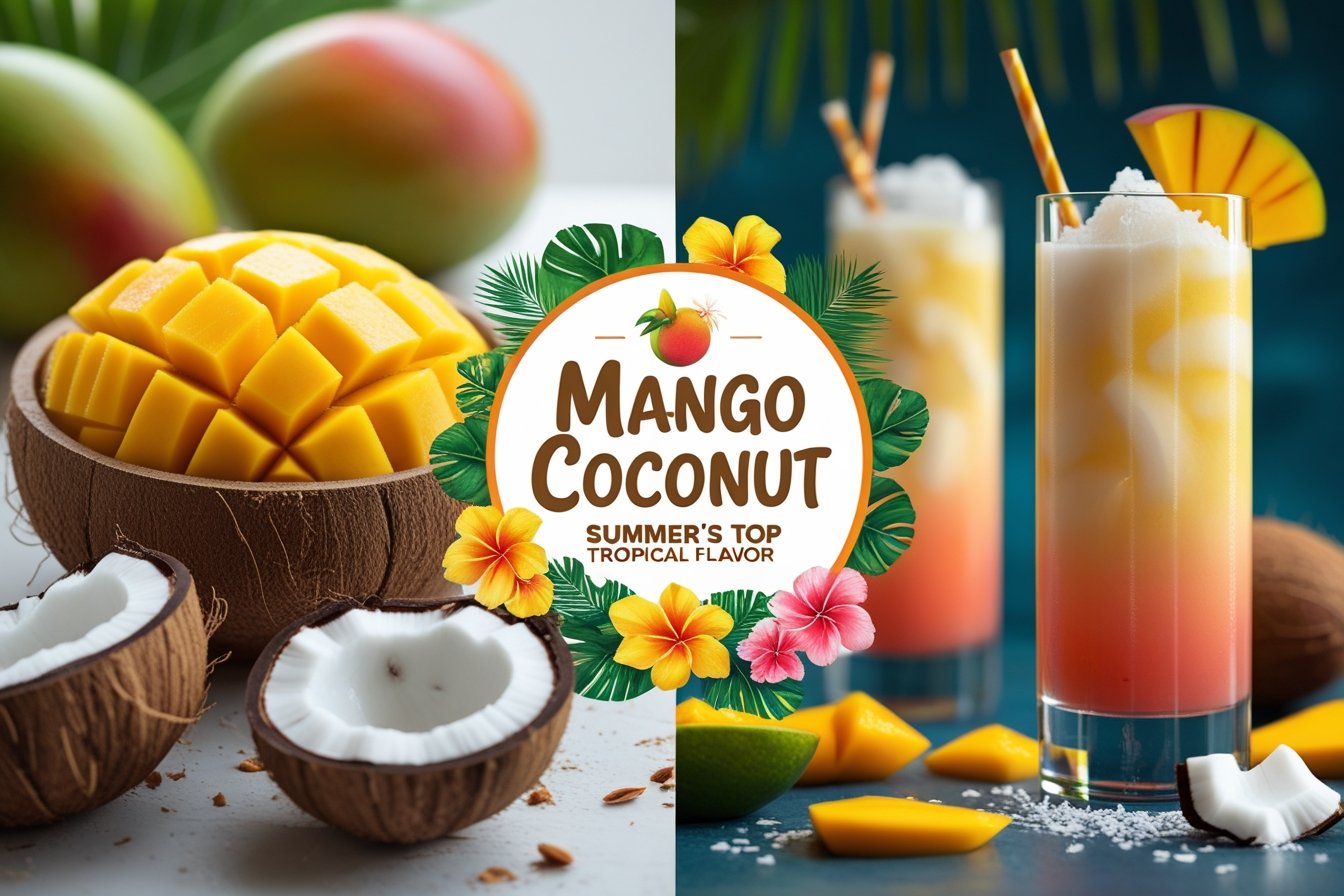
Picture yourself lounging under a palm tree, a gentle breeze carrying the sweet aroma of mango mingled with creamy coconut. That first blissful sip or bite transports you straight to an island getaway, no boarding pass required. Mango Coconut Bliss is more than a trend; it’s this season’s ultimate tropical flavor, turning every snack, smoothie, and dessert into a mini vacation. Let’s dive into why this duo captures summer’s spirit, how it conquered palates worldwide, and how you can ride its wave all season long.
Why This Flavor Rules Summer:
At its core, Mango Coconut Bliss thrives on contrast: the bright, tangy burst of ripe mango balanced by coconut’s mellow richness. This pairing delivers an instant flavor high, layers of sweet acidity, silky mouthfeel, and a whisper of nutty depth. From a sensory standpoint, our brains light up at tropical fruit aromas, linking them to warmth, relaxation, and fun.
Beverage brands and ice‐cream makers have seized on these associations, flooding shelves with mango‐coconut lattes, sorbets, and protein bars. It’s not just nostalgia for island vacations; studies show that tropical scents can elevate mood and reduce stress. In summer’s heat, nothing feels more refreshing than a taste that promises sunshine in each mouthful.
Cultural & Historical Journey:
Neither mango nor coconut is native to the Caribbean dreams we often envision. Mango originated in South Asia over 4,000 years ago, revered as the “king of fruits” in India. Coconut’s ancestral home stretches across Southeast Asia and the Pacific islands, where it fed and sheltered whole communities. Seafarers introduced both fruits to new shores. Mango trees arrived in East Africa and the West Indies by the 16th century; coconut groves dotted coasts from Madagascar to the Caribbean.
Over centuries, coastal cultures discovered natural pairings: grated coconut folded into mango chutneys, or fresh coconut milk blended with mango pulp. This grassroots fusion traveled via spice routes and colonial trade, planting the seeds for today’s global mango coconut craze.
Health Benefits of Mango and Coconut:
Beyond pure indulgence, Mango Coconut Bliss packs surprising nutrients. Mangoes brim with vitamin C, one cup offers over 100% of your daily needs, alongside vitamin A, folate, and potent antioxidants called mangiferin. These compounds support immune function, eye health, and cellular repair. Coconut contributes medium‐chain triglycerides (MCTs), which the body readily burns for energy, aiding metabolism.
It also supplies lauric acid, known for its antimicrobial properties, and essential minerals like manganese and potassium. When you blend mango with coconut water or milk, you create a hydrating elixir rich in electrolytes, perfect for beating the summer heat. In other words, you get a decadent taste plus a wellness boost.
Creative Culinary Applications:
Chefs and home cooks have unleashed mango coconut creativity far beyond smoothies. In savory kitchens, mango chutney gets swirled into coconut‐curry sauces, lending fruity brightness to shrimp or chicken. Street‐food purveyors skewer mango chunks brushed with a coconut‐infused chili glaze. At brunch, avocado toast meets its match when topped with mango salsa and toasted coconut flakes.
Even grain bowls benefit: coconut‐steamed rice paired with diced mango, fresh mint, and a drizzle of honey creates a harmonious balance of textures. The interplay of sweet, salty, and tangy elements means you can adapt this fusion across cuisines, Latin‐American, Southeast Asian, or modern Western, without ever losing that signature tropical vibe.
Mango-Coconut Beverages:
No overview of summer’s top tropical flavor is complete without drinks. The classic mango‐coconut smoothie blends frozen mango, coconut milk, and a squeeze of lime for a luscious, slurp‐worthy treat. Take it further with a Mango Coconut Bliss mocktail: puréed mango swirled into coconut water, garnished with mint and a pinch of chili salt.
Bartenders mix mango cordial, coconut rum, and pineapple juice for a twist on the piña colada they call the “Island Sunset.” Cold‐brew coffee aficionados even dunk espresso ice cubes into coconut‐mango lassi. With endless permutations, iced teas, frappés, and seltzers, this flavor combo dominates drink menus because it feels both exotic and effortlessly familiar.
Sweet Endings & Frozen Dream:
From gelato to gelatin, mango coconut desserts are everywhere. Artisanal ice‐cream shops craft sorbets with mango pulp and a ribbon of coconut cream. Bakeries fill sponge cakes with mango mousse and dust coconut flakes atop. Trendy cafés serve chia‐seed puddings layered with mango jelly and shredded coconut. For a no‐bake option, bliss balls mix dried mango, desiccated coconut, nuts, and a dash of cardamom, rolled into bite‐sized orbs that fuel energy between beach runs.
Even popcorn gets a tropical makeover: coconut oil, fresh mango zest, and a sprinkle of sea salt turn movie nights into a breezy escape. Seasonal fruit tarts, panna cottas, and even macarons embrace this pairing, proving its versatility across textures and formats.
Industry Trends & Consumer Appeal:
Retail data shows tropical flavor launches up by over 25% in the past two years, with mango‐coconut variants trailing only passion fruit in popularity. Brands leverage vivid packaging, bright yellows, and soft neutrals to evoke sunlit beaches. Social‐media influencers post #MangoCoconutBliss recipes, fueling consumer curiosity. Beyond food, personal‐care lines infuse shampoos, lotions, and candles with mango‐coconut scents, tapping into that same desire for escapism.
Seasonal collections sell out within weeks, underscoring strong demand. As global trade improves cold‐chain logistics, exotic fruits reach supermarkets year‐round, making this flavor accessible beyond peak summer months. The result: Mango Coconut Bliss transcends a mere trend to become a staple in product portfolios everywhere.
Crafting Your Own Mango Coconut Delights:
You don’t need a pro kitchen to capture Mango Coconut Bliss at home. Start simple: blend one ripe mango, ½ cup coconut yogurt, a squeeze of lime juice, and ice, then top with toasted coconut flakes. Craving a snack? Pulse frozen mango cubes, ½ cup shredded coconut, ¼ cup nuts, and a teaspoon of honey in a food processor; roll into balls and chill. For a breakfast twist, layer mango purée, coconut‐milk chia pudding, and granola in a glass.
Feeling adventurous? Whip coconut cream (chilled can unopened overnight) until fluffy, then fold in pureed mango and a drop of vanilla, freeze in popsicle molds for homemade creamsicles. With a basic pantry of fruits, seeds, and a blender, you can tailor sweetness, spice, and texture to your mood.
Sourcing and Eco-Friendly Choices;
As tropical flavor demand surges, mindful sourcing becomes vital. Choose fair‐trade mangoes and coconuts that ensure farmers receive equitable wages and sustainable farming practices. Look for organic certifications to avoid pesticides and support soil health. If fresh tropical fruits aren’t in season locally, choose responsibly packaged frozen options, these often lock in nutrients and reduce food waste.
Remember the coconut byproduct, too: coconut husks and shells can fuel biomass energy or become biodegradable packaging. By choosing brands transparent about their supply chains, you help protect delicate ecosystems and support communities where these fruits have deep cultural roots.
Conclusion:
Mango Coconut Bliss is more than a fleeting craze, it’s a sensory shortcut to summer sunshine, blending cultural heritage, nutritional perks, and endless culinary creativity. From retail shelves to your own kitchen, this tropical flavor duo thrills taste buds, brightens days, and brings a slice of paradise wherever you are. So next time you crave a taste of the islands, reach for mango and coconut, and let every bite remind you that bliss can be as simple as a perfect pairing.
FAQs:
1. What makes mango and coconut such a popular pairing?
Their contrasting flavors—tangy mango and creamy coconut—create a balanced, refreshing profile that evokes tropical sunshine.
2. Are there health benefits to combining these fruits?
Yes. Mango supplies vitamin C and antioxidants, while coconut offers healthy fats (MCTs) and essential minerals, making the combo both tasty and nutritious.
3. Can I use canned coconut milk for recipes?
Absolutely. Choose full‐fat, unsweetened coconut milk for richer texture and authentic tropical flavor.
4. How do I prevent mango from browning?
Sprinkle a little lime or lemon juice over cut mango pieces to slow oxidation and keep them looking bright.
5. Is frozen mango as good as fresh?
Frozen mango is flash‐frozen at peak ripeness, preserving nutrients and flavor, perfect for smoothies and desserts year‐round.
6. Where can I find eco-friendly mango coconut products?
Look for fair-trade and organic certifications on fresh fruit, frozen packs, and packaged snacks to ensure sustainable sourcing.
Leave a Reply